0% VAT on qualifying heat pump installations until 31 March 2027. What this means for you

Use the free calculator below for a quick idea of the right size system, what it costs to fit, and what it costs to run. It takes about a minute, and a free survey confirms the price before any work starts.
Family run, Sussex based, twenty years in the trade.
Pop in the room details below and you will get a rough size, price and running cost straight away. A free survey confirms the price before any work starts.
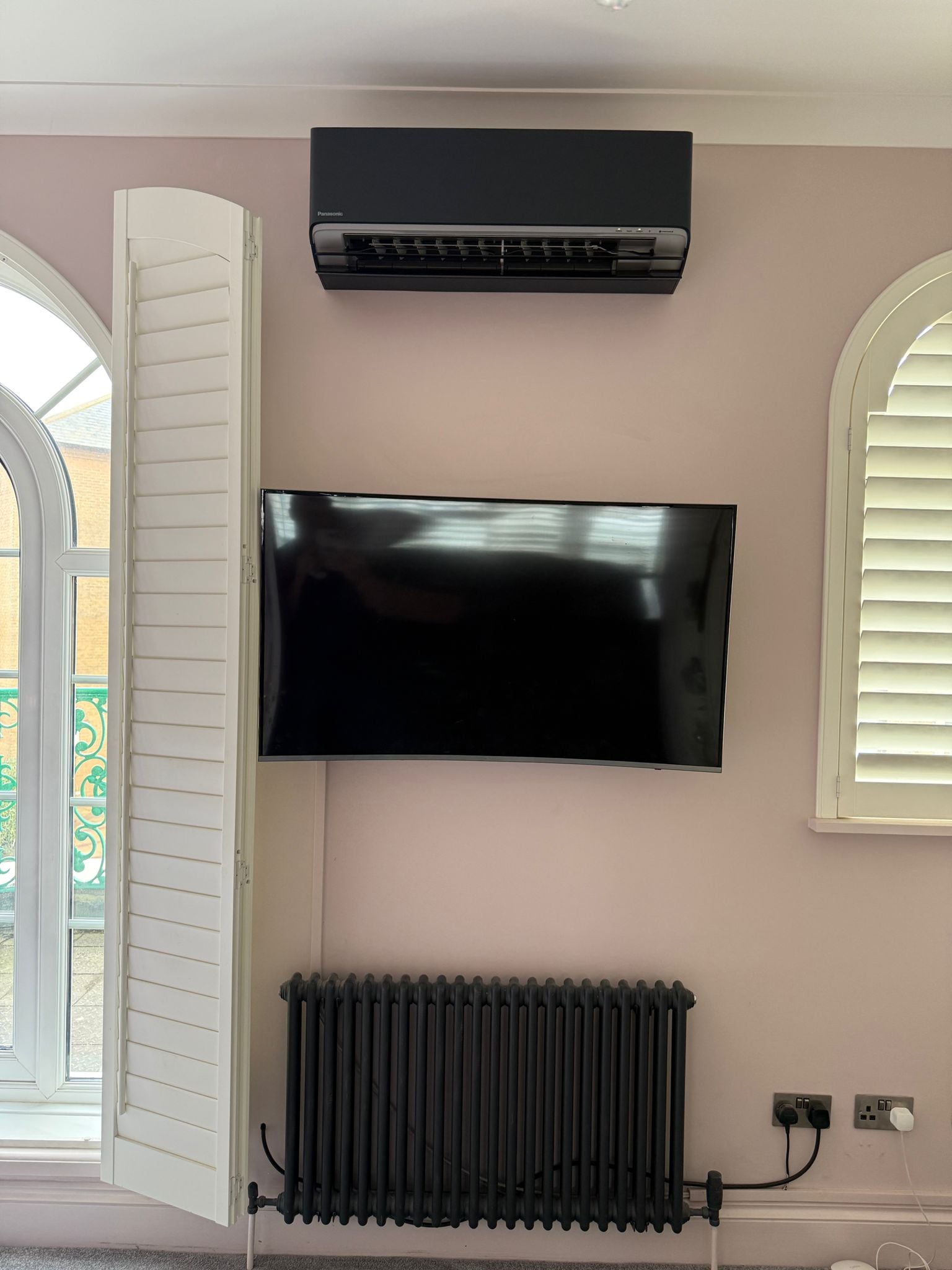
The best spot for each unit is set at the survey, but as a rough guide the indoor unit sits high on a wall with clear space around it so the air can move freely, ideally not boxed into a tight corner or sat directly above a door. The outdoor unit needs a position outside with good airflow around it, either on a wall bracket or on feet at ground level, sited with noise and neighbours in mind. Nick works out the neatest pipe route between the two and hides it where he can.
Wall, floor, ceiling cassette and concealed ducted units, fitted in homes and businesses across Sussex.
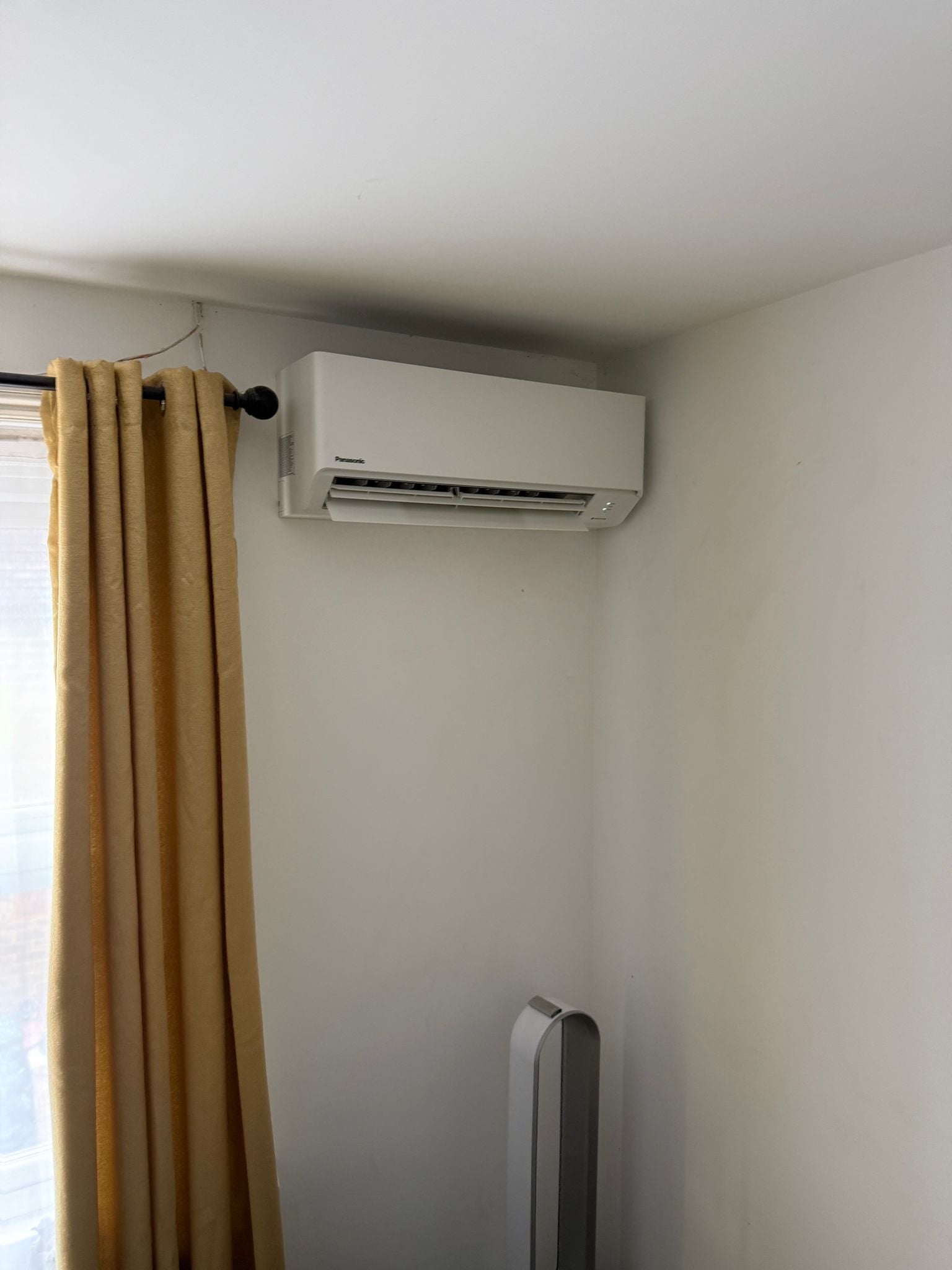
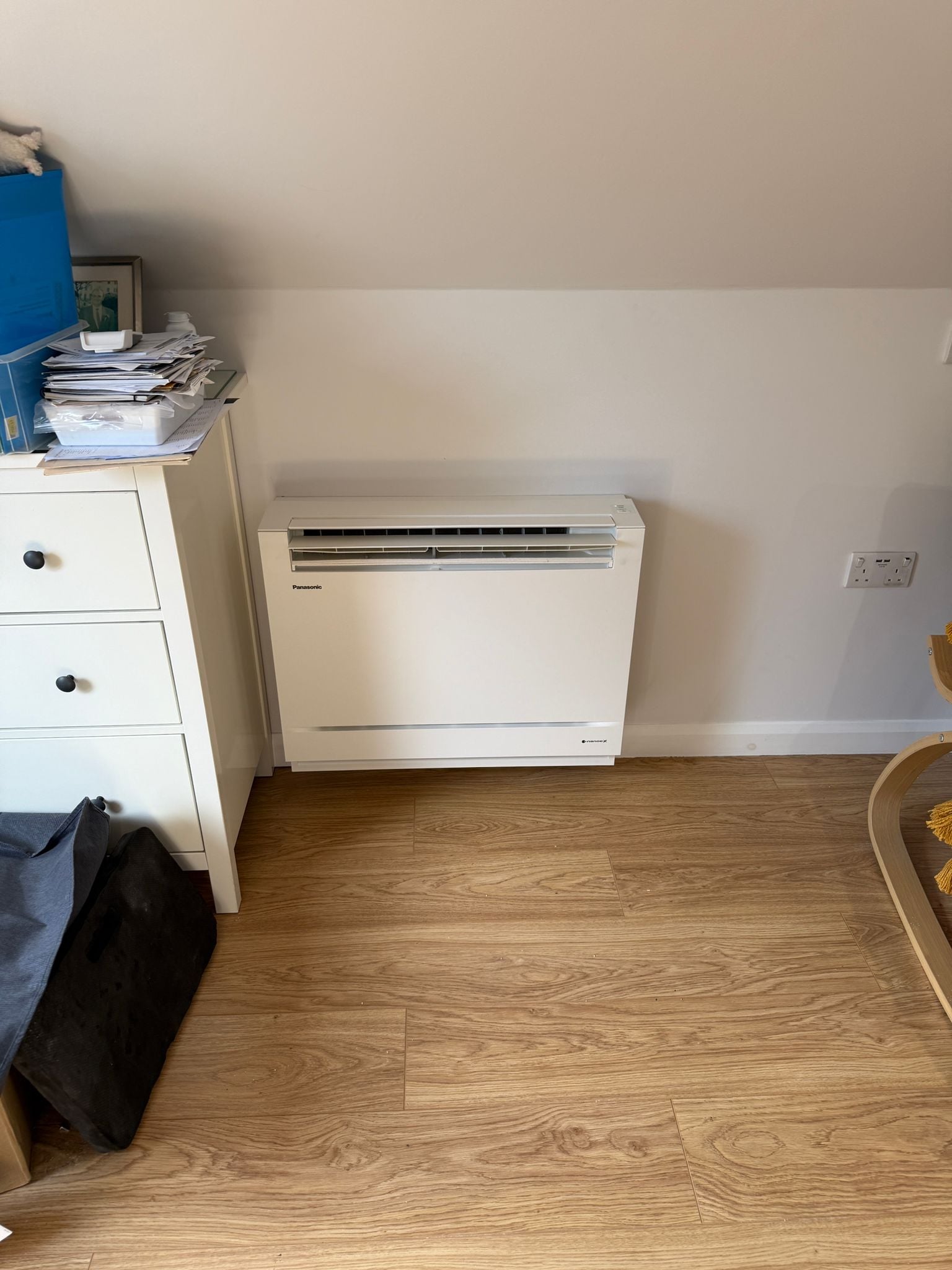
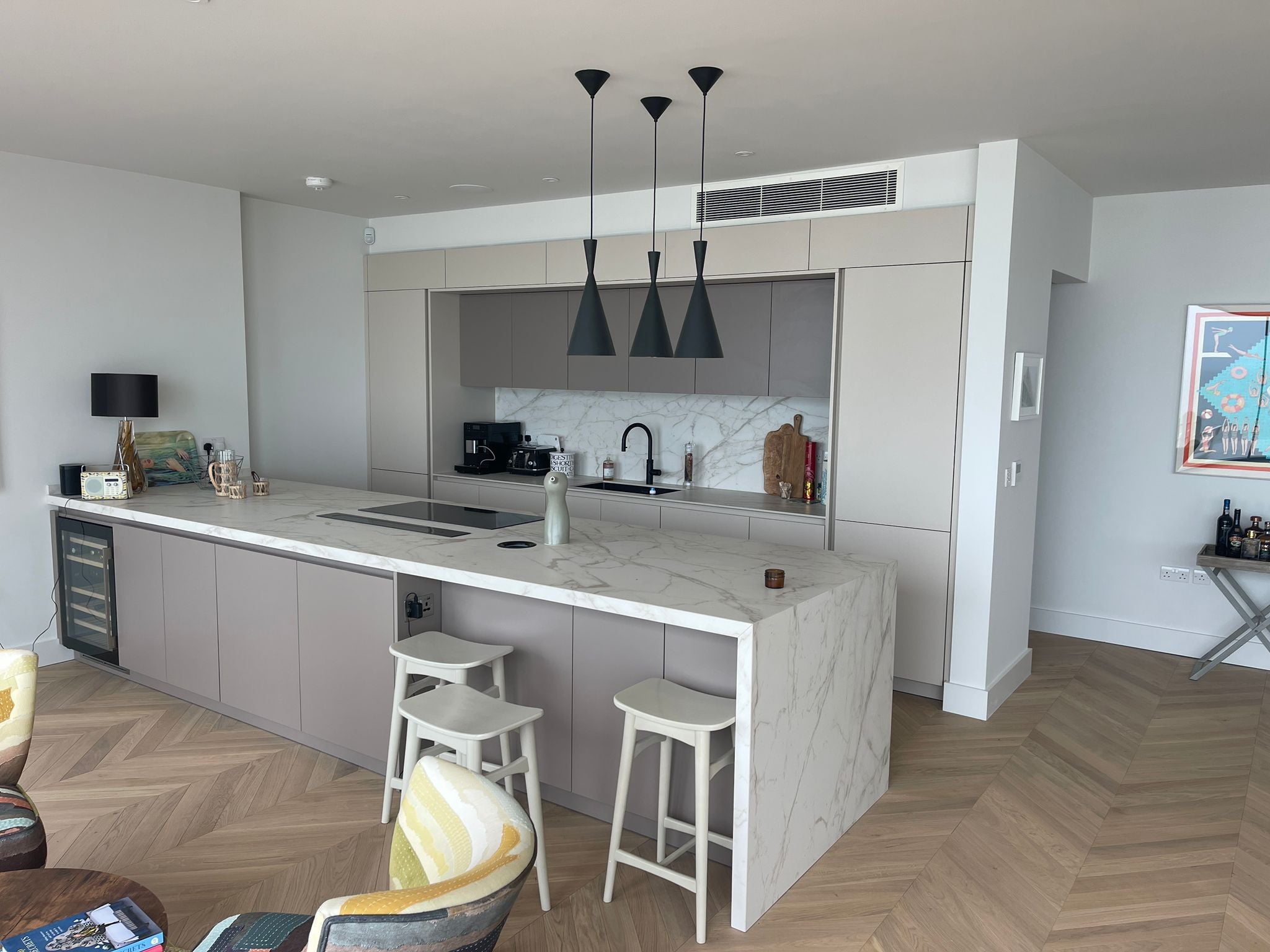
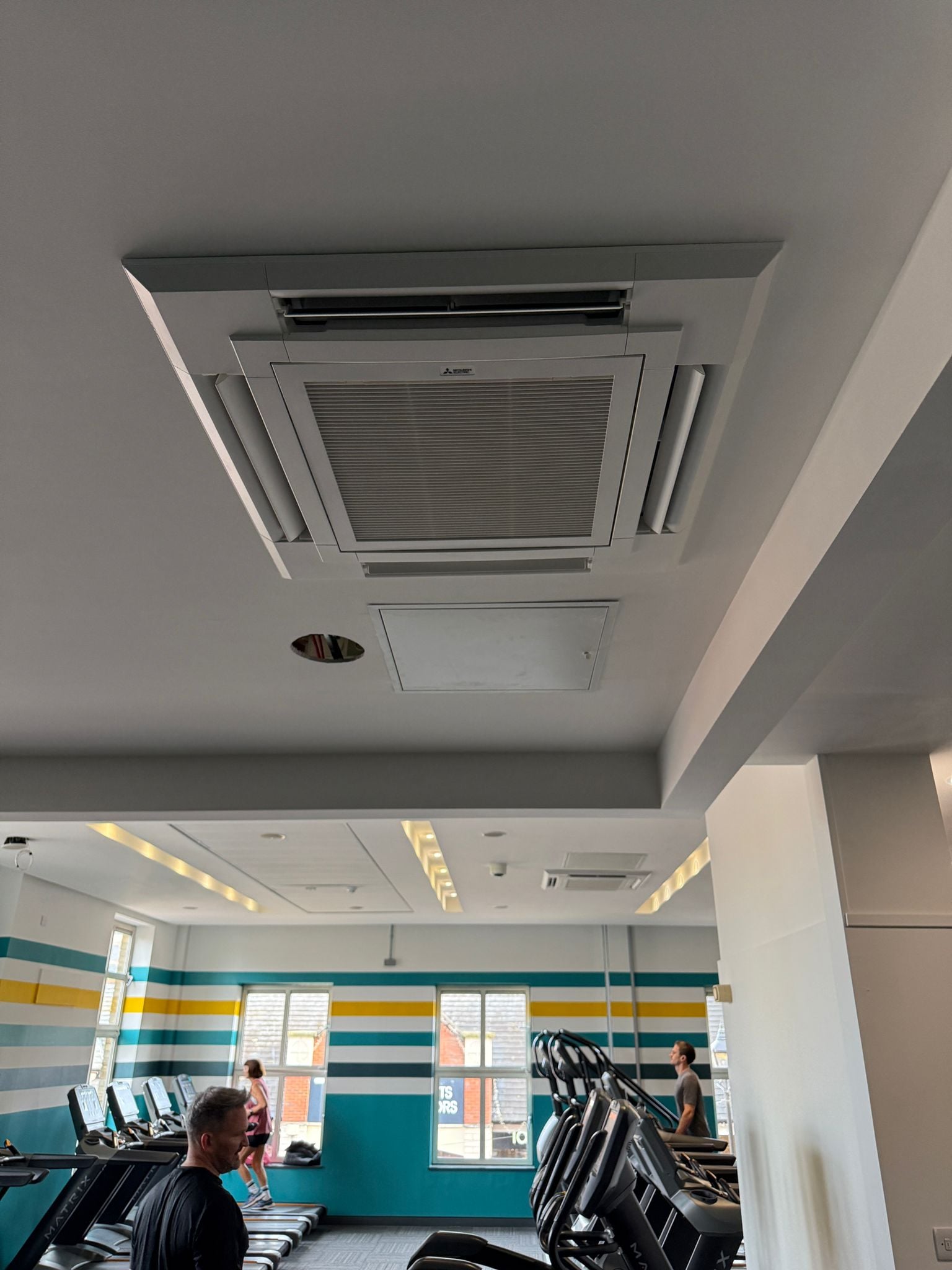
The most important factor in sizing a system is the volume of the room, which is its length multiplied by its width and its height. That gives a baseline cooling requirement. Getting this right is the single biggest decision in any air conditioning installation, which is why the calculator above asks for all three measurements rather than just floor area.
Cooling capacity is measured in BTU (British Thermal Units) per hour, or in kilowatts. They are just two ways of measuring the same thing, and one kilowatt is roughly 3,412 BTU. A higher figure means more cooling power. Most wall units in the UK are sold by their kW rating, while BTU tends to appear on portable units, so it helps to know both.
Two rooms of the same size can need very different systems. A room that gets strong afternoon sun, has large windows, or sits on the top floor under a warm roof needs more cooling than a shaded ground-floor room. The same goes for spaces with lots of glazing, such as a conservatory or a garden office, and rooms with extra heat from people, kitchens or equipment. The calculator adjusts for each of these.
An undersized unit runs constantly without ever reaching a comfortable temperature, which pushes up running costs and wears the system out faster. An oversized unit cools the room too quickly and switches off before it has removed moisture from the air, leaving the room cold but damp. Matching the unit to the room is what keeps it quiet, efficient and comfortable.
A single wall unit pairs one indoor unit with one outdoor unit and suits a bedroom, living room or home office. To cool several rooms you can run multiple indoor units from one outdoor unit with a multi-split system, or hide the whole thing in the ceiling with a ducted system. Each room is sized on its own, then the figures are combined to choose the outdoor unit. Once it is in, the same system heats in winter as well as cooling in summer, and our guide to air conditioning running costs covers what to expect on the bills.
Prefer a quick reference chart? See our what size air conditioner do I need guide for recommended kW and BTU by room size.
Once you have a rough size, Nick will confirm it at a free survey and give you a fixed quote.
Start with the volume of the room, then adjust for sun, glazing, which floor it is on, insulation, how many people use it and any heat from equipment. The calculator on this page does this for you and gives a rough size in seconds. A site survey confirms it.
As a rough guide, a typical room of 15 to 25 square metres needs somewhere between 9,000 and 12,000 BTU. Rooms with a lot of glazing, strong sun or extra heat from equipment need more, which is why the calculator adjusts for those factors.
An undersized unit runs constantly without reaching a comfortable temperature, which raises running costs. An oversized unit cools the room too quickly and switches off before it removes moisture, leaving the room cold but damp. Matching the unit to the room avoids both.
Yes. A multi-split system runs several indoor units from a single outdoor unit. Each room is sized on its own and the figures are combined to choose the outdoor unit, so every room gets the right amount of cooling.
Yes. Modern wall units are reverse-cycle heat pumps, so the same system that cools in summer also heats in winter, often more cheaply than electric heating.
No. It gives a reliable starting point so you know roughly what to expect. The final size and price are confirmed at a free on-site survey, where we check the room, glazing, pipe route and power supply.
