
Regular air conditioning maintenance saves money, improves efficiency, and extends your system’s lifespan. Poorly maintained systems often develop minor issues that quickly snowball into expensive problems. With cooling demand in the UK expected to rise by around 30%, this guide shows exactly what to do each season to avoid costly repairs and keep your AC working at its best.
Prefer to leave it to an expert? See our air conditioning maintenance and servicing for homes and businesses across Brighton, Hove and Sussex. This guide is for anyone who wants to understand the tasks or handle the basics between professional visits.
Why air conditioning maintenance matters
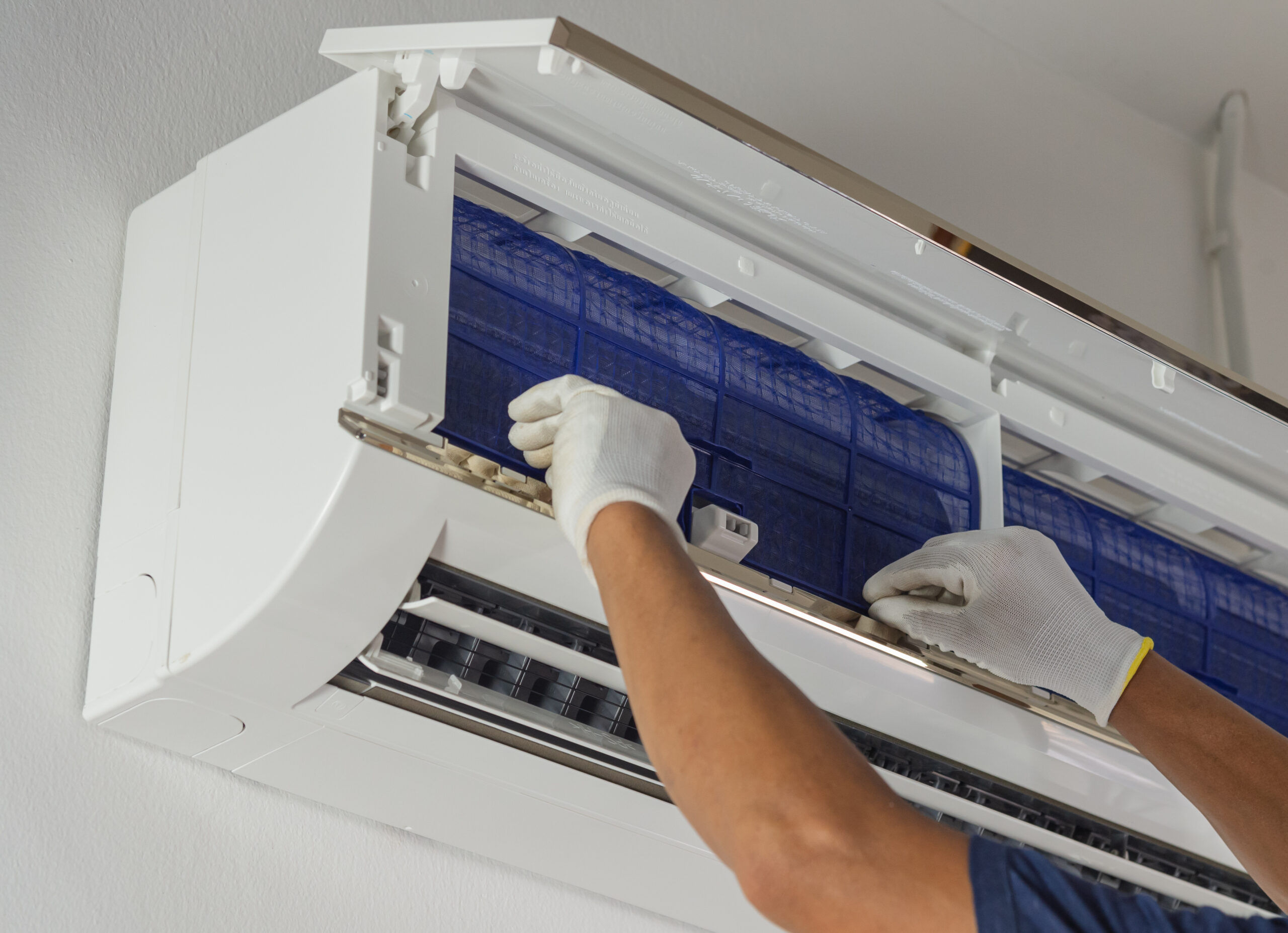
Regular maintenance prevents these common problems:
- Reduced cooling efficiency
- Higher energy bills
- Poor indoor air quality
- Unexpected breakdowns during peak usage
- Premature system failure
Start your summer preparation early by booking a professional service to catch any issues before they become expensive.
The benefit of maintenance is compounded by global warming trends and energy use. The UK, along with several other Northern European countries, is projected to experience a 30% increase in cooling demand, and over 30% of global energy consumption goes on heating, ventilation and air conditioning (HVAC) systems.
Let’s look at the numbers. Regular air conditioning maintenance in the UK typically costs £80 to £150 for homes and £100 to £300 for commercial systems. That small yearly cost helps prevent expensive repairs, which can range from £75 for a moderate fix to as much as £1,500 for major issues like a compressor replacement.
Neglected systems often start with minor, undetected issues: dust building on filters, slight imbalances in refrigerant levels, or loose electrical connections. These small problems force components to work harder and less efficiently, which accelerates wear and tear. The CIBSE Guide M notes that every piece of equipment has a typical economic lifespan, and how you maintain it affects how long it lasts. In short, looking after your system properly saves money and extends its useful life.
Spring air conditioning maintenance checklist (March to May)
Primary goal: prepare your system for summer’s heavy workload after months of minimal use.
Essential spring tasks
- Book a professional service. Arrange it early in spring before peak demand, so technicians can identify potential issues before they become expensive problems.
- Replace air filters. Install clean filters at the start of the season. Clogged filters are the number one cause of system damage and efficiency loss.
- Clear the outdoor unit area. Remove debris, leaves and vegetation within two feet of the outdoor unit. Poor airflow reduces efficiency by up to 20%.
- Clean condenser coils. Dirty coils significantly reduce cooling capacity. Professional cleaning ensures optimal heat transfer.
- Inspect ductwork. Check visible ducts for damage, loose connections or dust build-up so cooling is distributed evenly.
- Test system performance. Run the system before hot weather arrives. Listen for unusual noises and check airflow from all vents.
- Check thermostat settings. Verify accurate temperature readings and start with moderate settings (23 to 24°C) as temperatures rise.
Professional spring services include
- Refrigerant level checks and adjustments
- Electrical connection inspections
- Motor lubrication
- Drainage system cleaning
Summer air conditioning maintenance checklist (June to August)
Primary goal: maintain peak performance during the system’s heaviest workload period.
Monthly summer tasks
Filter management: check filters monthly during peak use. Replace when dirty, or every one to three months depending on usage.
Outdoor unit: remove debris after summer storms, trim vegetation to keep a two-foot clearance, and check for proper airflow around the unit.
Performance monitoring — watch for these warning signs:
- Inadequate cooling despite normal operation
- Ice forming on the unit
- Strange noises or odours
- Higher than normal energy bills
- Uneven temperatures throughout the property
Vents and drainage: clean air vents monthly to maintain airflow, and ensure condensate drains are clear to prevent water damage.
Optimal summer settings
- 22 to 25°C for the best comfort and efficiency balance
- 24 to 25°C for maximum energy savings
- Use a programmable thermostat: 25°C when away, 22 to 23°C when home
Use ceiling fans to circulate cool air, close blinds during peak sun, and keep temperatures consistent rather than making frequent adjustments.
Autumn air conditioning maintenance checklist (September to November)
Primary goal: protect your system through winter and prepare for next year’s cooling season.
Essential autumn tasks
- Deep clean the outdoor unit. Remove accumulated debris, leaves and dirt to prevent corrosion and pests during winter.
- Clean indoor components. Clean the indoor unit, evaporator coil area and blower components after heavy summer use.
- Inspect and seal ductwork. Look for leaks or damage from the active season. Proper sealing improves efficiency.
- Install fresh filters. Replace filters before winter, or keep them clean if you use heating functions.
- Book a professional tune-up. A comprehensive service addresses summer wear and prepares the system for winter.
- Check electrical connections. Inspect for wear, corrosion or loosening from active use.
Winter preparation
- Consider breathable outdoor unit covers (never plastic)
- Ensure proper drainage to prevent ice formation
- Check insulation around refrigerant lines
- Reduce system use gradually as temperatures drop
Winter air conditioning maintenance checklist (December to February)
Primary goal: protect your investment during dormant months and plan for next season.
Essential winter tasks
- Use breathable covers if the manufacturer recommends them
- Keep the unit clear of snow and ice
- Prevent moisture build-up with proper ventilation
- Continue filter maintenance if your system includes heating
- Use the quiet months to plan any repairs or upgrades, often at off-season rates
Heat pump specific maintenance
For year-round heat pump operation, continue monthly filter changes, keep the outdoor unit clear of snow and ice, monitor for ice on the coils, and maintain airflow around the outdoor unit. For homes with air-to-air heat pumps, regular maintenance keeps performance consistent across all rooms.
When to call a professional
Annual professional services include:
- Refrigerant level checks and adjustments
- Electrical system inspection and testing
- Motor lubrication and belt adjustments
- Comprehensive performance testing
- Ductwork inspection and sealing
- Thermostat calibration
- Safety control testing
Warning signs that need professional help: reduced cooling efficiency despite regular maintenance, unusual noises or vibrations, frequent on/off cycling, ice on the unit, higher energy bills than normal, poor air quality, or musty odours.
Basic tasks like filter changes can be done yourself, but professional servicing ensures safety and thoroughness. UK Government guidelines also make regular inspections mandatory for certain systems.
Your maintenance schedule template
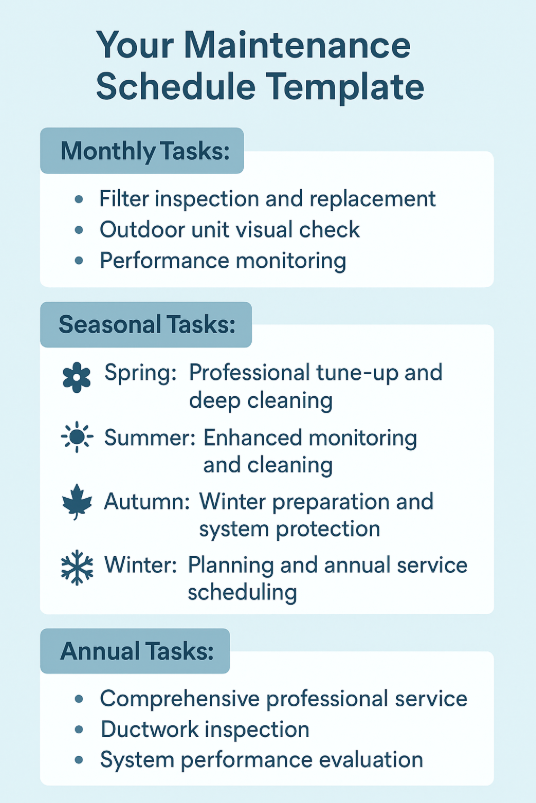
Monthly: filter inspection and replacement, outdoor unit visual check, performance monitoring.
Seasonal: spring professional tune-up and deep clean, summer monitoring and cleaning, autumn winter-prep and protection, winter planning and annual service scheduling.
Annual: comprehensive professional service, ductwork inspection, system performance evaluation.
Best practice is to combine an annual professional service with seasonal DIY maintenance. Don’t forget to include your loft conversion air conditioning in your seasonal checklists to keep comfort upstairs.
Benefits of proper seasonal maintenance
- Energy efficiency: well-maintained systems use 15 to 30% less energy.
- Extended lifespan: regular maintenance adds three to five years to system life.
- Improved air quality: clean filters and components improve indoor air quality, benefiting health and comfort.
- Lower repair costs: preventive maintenance catches small issues before they become expensive.
- Reliable operation: properly maintained systems have 70% fewer unexpected failures.
- Warranty protection: most manufacturers require regular maintenance to keep warranty coverage valid.
With proper maintenance, your air conditioning system lasts longer and performs better, saving you money in the long run.
Common maintenance mistakes to avoid
- Neglecting filter changes. The most costly mistake. Check monthly and replace as needed.
- Improper outdoor unit covering. Never use plastic or completely seal the unit, as it traps moisture.
- Ignoring strange noises. Unusual sounds signal problems that are cheaper to fix when caught early.
- DIY refrigerant work. Refrigerant handling requires professional certification and can be dangerous or illegal otherwise.
- Delaying professional service. Regular cleaning helps, but professional servicing is essential for performance and safety.
Conclusion
Seasonal air conditioning maintenance is an investment in comfort, efficiency and system longevity. Every system is unique, so if you have a more complex setup like VRV or VRF systems, understanding their differences helps you maintain them effectively.
Don’t wait for a breakdown during peak usage. Book your air conditioning maintenance and servicing with Eaglereach, or get in touch to speak with one of our engineers.
Frequently asked questions
How often should I change my air conditioning filter?
Every one to three months, depending on usage, air quality and filter type. Check monthly during peak usage and replace when dirty.
Can I do air conditioning maintenance myself?
Basic tasks like filter changes and outdoor unit cleaning are fine for homeowners. Refrigerant work, electrical repairs and comprehensive servicing require professional expertise.
What’s the best time to schedule professional service?
Spring is ideal for pre-season preparation, autumn for post-season maintenance. Many professionals offer discounts during off-season periods.
How do I know when my system needs professional attention?
Warning signs include reduced cooling efficiency, unusual noises, higher energy bills, poor air quality or ice formation. Any of these warrant a professional inspection.
Is it more efficient to leave air conditioning on constantly in summer?
Modern systems are generally more efficient with consistent operation than frequent on/off cycling. Programmable thermostats that adjust when you’re away still provide significant savings.
